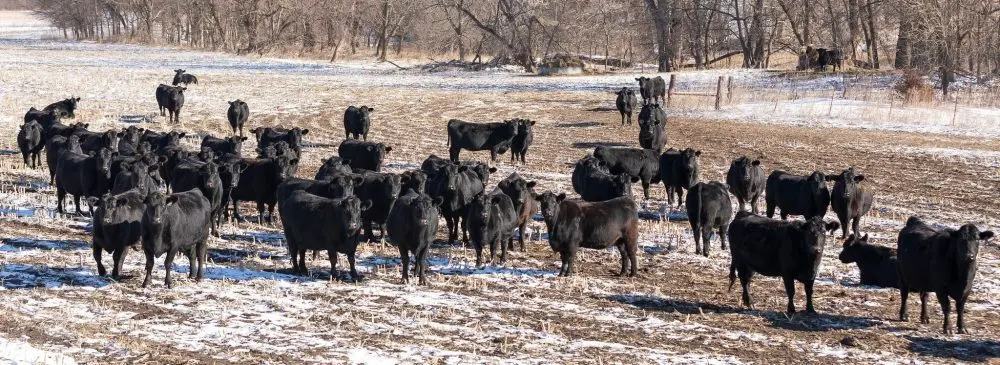
MANHATTAN, Kan. – As temperatures become colder, a K-State cow-calf specialist says it is important for beef producers to be on the lookout for cold stress in their cattle.
“Beef cows begin to experience cold stress when effective ambient temperatures drop below the lower critical temperature,” said Jason Warner, an assistant professor and extension cow-calf specialist at K-State.
Effective ambient temperature accounts for wind chill, humidity and solar radiation. Lower critical temperatures are influenced by environmental and animal factors.
“Once effective temperatures are below this point, the cow must generate additional heat to maintain her body temperature,” Warner said. “Cold stress increases the energy required for a cow to maintain her body temperature.”
The increase in energy needs is affected by body condition score and coat condition, including the length of the coat and whether it is dry or wet.
“The energy needs of a cow with a dry hair coat increase by 1% for each degree Fahrenheit below the lower critical temperature, while needs for a cow with a wet hair coat increase by 2%,” Warner said.
He added that the producer’s feeding program for cattle should be adjusted to accommodate the change in energy requirements, primarily when energy needs for the cow increase by more than 20% due to cold stress.
“Feeding additional pounds of an average-quality hay typically offsets increased energy needs during periods of moderate cold stress,” Warner said.
However, in cases of severe or prolonged cold stress, hay alone is usually not sufficient.
“Start with conservative amounts of grains and gradually increase,” Warner said. “Consider using feedstuffs with highly digestible fiber and lower starch content.”
He said this strategy reduces forage digestion issues and risks of founder (or laminitis, a painful hoof condition) when supplementing grains. Along with proper feeding, there are a few points to consider when managing cowherds through cold stress.
- Ensure cows have access to clean, fresh water.
- Provide bedding to help insulate against the cold.
- Body condition is key.
- It is difficult to add body condition after calving, and even more challenging during cold stress events.
- Thin cows, without wind protection and wet hair coats, have the greatest risk.
Cattle producers can learn more on this topic in the publication, Managing Beef Cows During Cold Stress, available from the K-State Extension bookstore. More information on managing livestock is available at local extension offices in Kansas.