Fertilizer remains one of the most critical and volatile inputs on the farm, and NSP is making sure farmers’ concerns are being heard at every level.
Over the past several weeks, National Sorghum Producers has been actively engaged on fertilizer issues, meeting directly with industry leaders and policymakers while joining coalition letters focused on stabilizing supply and addressing rising costs. Most recently, NSP leadership had a call with Corey Rosenbusch, CEO of The Fertilizer Institute, underscoring just how urgent and widespread these concerns have become across agriculture.
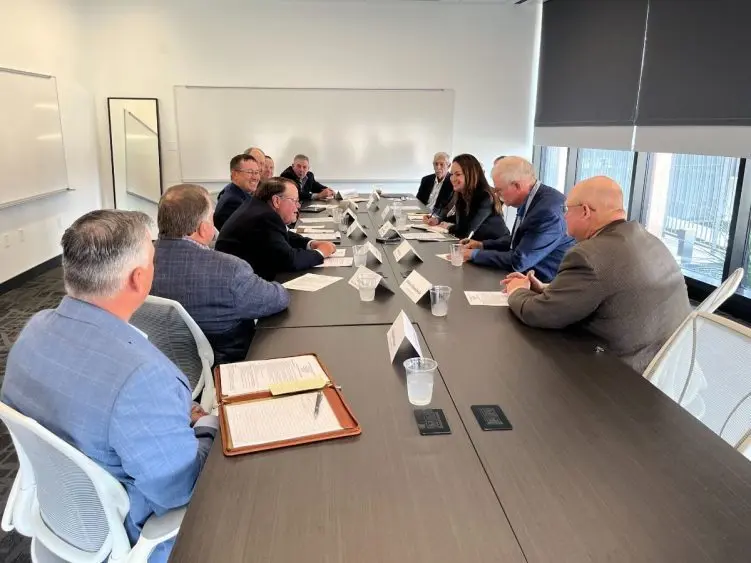
That ongoing work culminated in a recent roundtable with U.S. Secretary of Agriculture Brooke Rollins, where NSP brought real-world challenges directly to the administration.
The timing could not be more critical. As planting season gets underway, farmers are facing a tightening squeeze: elevated fertilizer costs, global supply uncertainty, and commodity prices that have not kept pace. Disruptions overseas continue to ripple into domestic markets, driving volatility at a time when producers need certainty most.
While sorghum is one of the most efficient crops when it comes to fertilizer use, particularly nitrogen, that efficiency does not shield growers from broader market pressures. Fertilizer remains a major line item, and when prices rise or supply becomes uncertain, the impact is felt across every acre.
At the farm level, the concern is simple: margins are tightening. Input costs remain high while returns remain uncertain, creating real financial pressure and raising concerns about longer-term impacts to farm viability.
Throughout these discussions, NSP has consistently emphasized the need for practical, immediate solutions. That includes maintaining open and reliable supply chains, ensuring fertilizer can move efficiently from ports to rural communities, and avoiding policies that add unnecessary cost or restrict access. At the same time, long-term stability will depend on supporting domestic production and continued coordination across agencies.
Growers also made clear that availability is about more than what is purchased on paper. Timing, delivery, and price certainty all matter. Fertilizer that is delayed, unavailable at key application windows, or subject to price swings creates real risk in the field, regardless of when it was bought.
The message from sorghum producers remains consistent: fertilizer is not just another input. It is a foundational piece of the farm economy, and its affordability and availability will directly shape planting decisions this season.
NSP will continue working across industry and government to ensure growers’ voices are heard and that real solutions remain front and center.