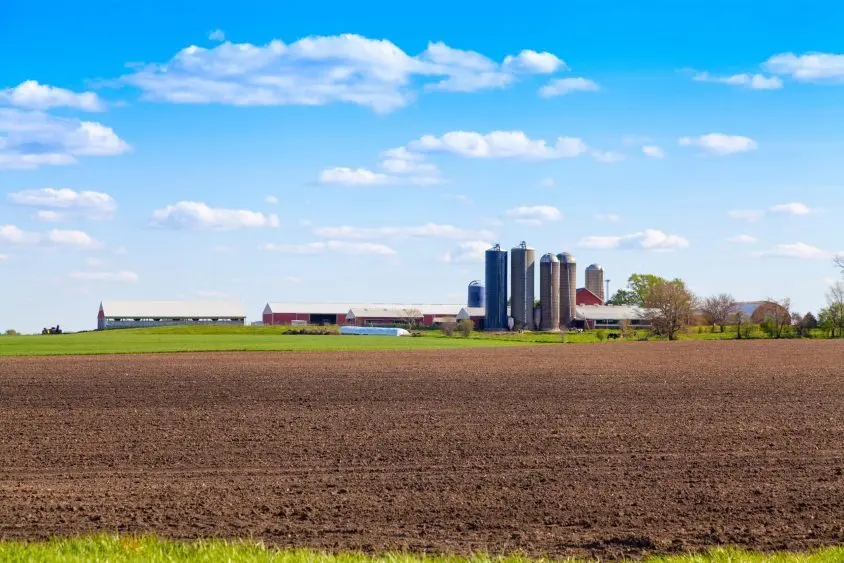
U.S. farmland is worth more than ever. But economists, lenders and farmers say the market that boomed after 2020 is cooling. Gains are getting smaller, rising costs are squeezing farm income and some of the strongest support for prices now comes from buyers who don’t plan to farm.
The U.S. Department of Agriculture’s annual Land Values Summary, released July 31, put the average value of farm real estate, meaning land and buildings, at $4,500 an acre in 2026, up 3.4% from last year. It was the sixth straight yearly increase, and values are now nearly 44% higher than in 2020, according to the American Farm Bureau Federation.
Cropland topped $6,000 an acre for the first time, and pasture reached $2,000.
The record hides a slowdown. Both cropland and pasture gained less this year than in 2025, and quarterly surveys of agricultural lenders by Federal Reserve banks suggest values in parts of the Corn Belt have stopped rising.
A plateau in the Corn Belt
The Federal Reserve Bank of Chicago, which covers Illinois, Indiana, Iowa, Michigan and Wisconsin, reported in August that farmland values in its district were flat compared with a year earlier. That was the slowest growth since late 2024.
Results differed by state. Values rose in Iowa and Illinois but fell in Indiana and Wisconsin.
After accounting for inflation, the bank said, land values in the district fell more than they had in any year-over-year period since 2016.
David Oppedahl, a farm economy specialist at the Chicago Fed and lead author of its quarterly AgLetter, said in a Q&A published by the bank that “we may be having a period where there’s the beginning of a plateau.”
Lenders are not expecting a rebound soon. Most of those surveyed expected values to hold steady in the third quarter, and more expected a decline than an increase. More than 4 in 10 said farmland was overvalued, and none said it was undervalued.
A farmland manager survey shows the same caution in Illinois. In the 2026 Illinois Land Values and Lease Trends report from the Illinois Society of Professional Farm Managers and Rural Appraisers, most respondents said they expected prices to fall this year. The group’s midyear update found values flat to slightly lower.
The fall auction season is being watched closely because sales after harvest often set prices through the winter. Early signs have been mixed. A central Illinois auctioneer said in October that early fall auctions drew more bidders than a year ago, which he credited to stronger commodity prices since early August. He noted those sales involved top-quality ground and cautioned against drawing conclusions about all land. A broker in northern Illinois said there had been fewer auctions than last year and that lower-than-expected yields could dampen optimism.
Strength in the Plains and in ranch country
The slowdown is not happening everywhere. Since 2020, the biggest gains have come in the central Plains, where farm real estate values in Kansas, Nebraska and South Dakota have risen 60% or more, according to the Farm Bureau.
The Federal Reserve Bank of Kansas City reported in August that ranchland values in its district reached new record highs on the strength of cattle prices, while cropland values edged up. The bank said agricultural credit conditions continued to slowly worsen, but financial stress was modest and farmland values stayed strong.
Other lenders in the region describe a steady market. Farm Credit Services of America, AgCountry Farm Credit and Frontier Farm Credit said benchmark values were stable in the first half of the year across the eight states they serve. They noted that farmers are still the main buyers and that a limited supply of land for sale has helped hold up prices across much of the region.
Farther south, bankers responding to the Federal Reserve Bank of Dallas’ third-quarter survey reported strong gains in ranchland and dryland cropland values from a year earlier. Irrigated cropland slipped, and all types of land lost ground after adjusting for inflation.
On the West Coast, Farmer Mac said its Farmland Price Index rose in the first half of 2026 from a year earlier. Recovering prices for permanent crops such as almonds and pistachios, along with clearer expectations about water supplies, may have helped support land values there, the lender said.
Land values outrun farm income
Land prices keep rising even as farms earn less, and that gap worries many analysts.
In its Sept. 3 forecast, the USDA’s Economic Research Service projected net farm income, a broad measure of farm profits, at $158.4 billion for 2026. That is down 2.6% from last year, or more than 5% after inflation.
The biggest problem is costs. The agency expects farm production expenses to rise 4.5% this year.
Government money is filling much of the gap. The agency expects direct government payments to farmers to jump nearly 70% this year. Most of the increase comes from two federal programs, Agriculture Risk Coverage and Price Loss Coverage, which pay farmers when crop prices or revenue fall below set levels. The 2025 tax and spending law known as the One Big Beautiful Bill Act made those programs more generous starting with the 2025 crop. Payments for a crop year are made the following year, so that money is arriving in 2026. Low prices for crops such as corn also mean more farms qualify. The total also includes aid paid this year for losses from earlier years, according to the Farm Bureau.
The farm sector’s debt ratio is edging up as well. The USDA’s next farm income forecast is due Dec. 2.
The Chicago Fed’s survey also points to growing financial strain. The share of farm loans with serious repayment problems in the district rose to its highest level since 2020, and lenders reported more loan renewals and extensions.
Farmers worried about now, confident about later
The Purdue University-CME Group Ag Economy Barometer, a monthly survey of 400 producers, shows how farmers can feel uneasy about this year while staying confident about land over the long term.
In the September survey, released Oct. 6, the barometer fell sharply. A record share of farmers, more than half, named higher input costs such as diesel and fertilizer as their biggest concern. More expected their finances to get worse over the next year than expected them to improve.
Even so, farmers’ long-term expectations for land values hit a record high.
Michael Langemeier, director of Purdue’s Center for Commercial Agriculture, told Capital Press that a farmer can be concerned about profitability today “and still believe that farmland will retain or increase its value over time.”
Joana Colussi, an agricultural economist with Purdue’s Center for Commercial Agriculture, told Brownfield Ag News that respondents named alternative investments, interest rates and inflation as the biggest influences on land values. She said high input costs are the main thing holding back farm finances. “We have seen farmers hold off on major investments over the past few months,” she said. Most respondents expect cash rents to stay about the same next year.
Renters pay high rents without the gains
Cash rents have risen far less than land values, and the gap is widening.
The USDA said the national average cash rent for cropland was $160 an acre in 2026, essentially unchanged from 2025, while pasture rent reached a record high.
Since 2020, cropland rents have risen far more slowly than cropland values, according to the Farm Bureau’s analysis. Farm Bureau economists noted that higher land values help owners by building equity and borrowing power. Farmers who rent get none of that equity but still pay rents near record highs.
Rents vary widely by state, from more than $300 an acre in California to about $40 in Oklahoma and Montana.
Because rents are high compared with crop returns, land returns relatively little income for its price. That is one reason lenders and appraisers point to buyers who don’t depend on farm income as a major source of support for values.
Data centers and solar farms reach farm country
Data center and energy developers are the newest of those buyers, and they are reshaping land markets in some rural areas.
Chicago Fed lenders said these projects helped hold up land values, though one expects that to fade “as outside pressure from solar and data centers subsides.”
The American Farm Bureau Federation estimates that nearly 5,000 data centers are active or under construction nationwide. “For agriculture, this trend presents both opportunity and risk,” the group said.
Land purchases for future data centers reached about $6 billion in the first half of 2026, CNBC reported, citing the real estate firm Avison Young.
Those projects also need power, and the grid may struggle to keep up. In January, the North American Electric Reliability Corporation warned that more than half the regions it studies, including grids serving much of the Midwest farm belt, face an elevated or high risk of shortfalls in the next five years, largely because of data center demand. The group’s John Moura called it “not a prediction of failure but an early warning.”
Power shortages do happen. In August 2020, California ordered rolling blackouts during a severe heat wave when demand outran supply, the state’s first such outages since its 2001 energy crisis.
California utilities also cut power during hot, dry and windy weather to keep lines from sparking wildfires.
Texas and parts of the Southeast had larger rolling blackouts during winter storms in 2021 and 2022, and a central U.S. grid operator warned of possible blackouts during a heat wave this July.
The trend has caused pushback. “Once our farmland is gone and paved over, we’ll never farm it again,” Texas Agriculture Commissioner Sid Miller said in a Texas Tribune report. A Texas farmer who lost rented land to a Google data center told the Tribune, “We can’t compete with that.”
Some landowners are saying no. A Pennsylvania farmer turned down more than $15 million for 261 acres and sold the development rights to a farmland trust instead, Fortune reported.
Concern crosses party lines. A University of Illinois farmdoc daily analysis of public opinion found worries about how data centers affect farmland, water and electricity prices rose among both Democrats and Republicans between February and August 2026.
Interest rates stay high
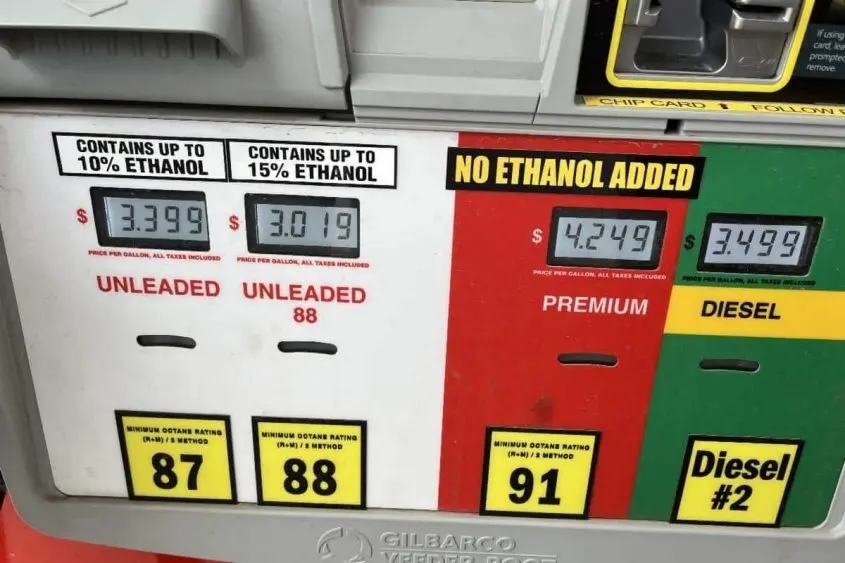
Borrowing costs remain a major factor in what buyers can pay, and relief has stalled. After cutting rates in 2025, the Federal Reserve raised its benchmark rate in September for the first time since 2023 and left it unchanged at its Oct. 28 meeting.
Farm loan rates eased from their peaks through early 2026 but remain well above levels from before 2022, with farm real estate loans generally running around 7%. In the Dallas Fed’s third-quarter survey, bankers reported that rates rose for every type of loan.
Lenders in the Chicago district expected farm real estate loan volume in the third quarter to fall below the level of a year earlier. That fits a market where fewer buyers can afford to finance land at current prices and rates.
A large transfer of land is coming
Over the long term, the biggest force in the market may be the age of the people who own the land.
American Farmland Trust estimates that nearly 300 million acres, about one-third of the country’s agricultural land, could change hands in the next 20 years. The group says the average U.S. farm and ranch landowner is now 60 years old.
How that land changes hands matters for prices and for who farms it. In Illinois, more than half of farmland transfers are farm estate sales, according to University of Illinois Extension. In Iowa, a large share of farmland changed owners over a 20-year period, yet Iowa State University research found that farmers at the start of their careers owned just 2% of the state’s farmland. Land is changing hands, but it isn’t necessarily reaching beginning farmers.
With cropland above $6,000 an acre, interest rates near 7% and farm income falling, young farmers find it hard to buy land, and many of them rent instead.
What to watch
Most economists and lenders surveyed this year expect national values to hold roughly steady in the near term instead of falling sharply.
The next updates come within weeks. The October Ag Economy Barometer is scheduled for release Nov. 5, two days later than usual because of the midterm elections. The Dallas Fed released its third-quarter lender survey in September, but third-quarter surveys from the Chicago, Kansas City, Minneapolis and St. Louis Fed banks had not been published as of early November. The USDA’s final farm income forecast of the year is due Dec. 2.