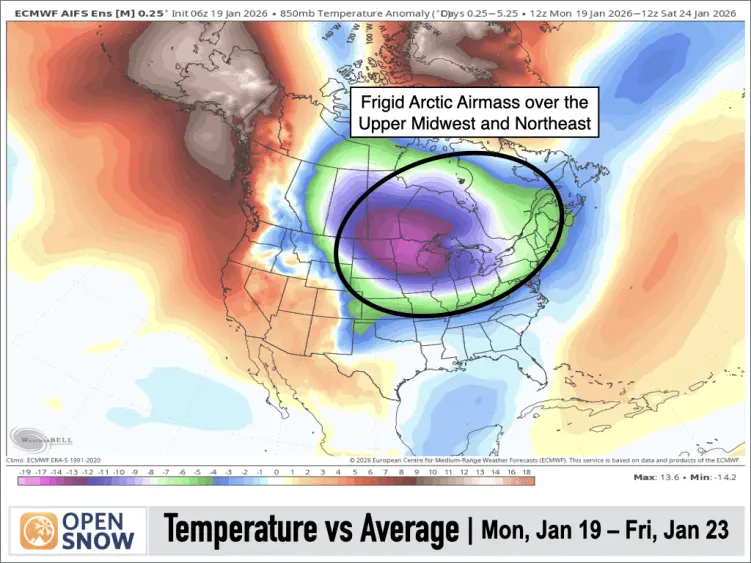
Weather conditions across the United States were relatively calm over the long holiday weekend, with much of the country staying dry. Scattered snow showers moved through parts of the Midwest, while areas of the Southeast picked up pockets of rainfall. That quieter pattern is now giving way to a more impactful shift as a sharp cold snap settles into the Northern Plains and Upper Midwest.
Subzero temperatures are already in place across the eastern Dakotas, Minnesota, Iowa, and Wisconsin, with the cold expected to persist through at least midweek. The prolonged stretch of below-zero readings raises concerns for livestock stress, increased feed and energy demand, and transportation challenges, while winter wheat areas remain locked in dormancy. Cold air is also expected to spill farther south and east at times, reinforcing winter conditions and limiting any meaningful near-term warming.
Farther south, parts of the Southeast that saw rainfall over the weekend may trend drier heading into the latter part of the week, allowing field conditions to stabilize but keeping soil moisture uneven depending on location. Overall, the domestic forecast remains dominated by cold risks rather than widespread precipitation, a pattern traders and producers alike will continue to monitor closely.
In South America, weather continues to diverge sharply across key growing regions. Northern areas of Argentina picked up heavy rainfall over the weekend, offering short-term relief to some crops. However, large portions of central and southern growing areas largely missed out again. Forecasts continue to call for mostly dry conditions ahead, with a heat wave developing in the 6- to 10-day window. That combination of heat and limited moisture could add stress during critical reproductive stages for corn and soybeans.
Meanwhile, Brazil saw very uneven rainfall over the weekend. Eastern growing areas received more favorable totals, helping stabilize crop conditions there, while much of the center-west remained on the dry side. The lack of consistent rainfall in central Brazil continues to be a key concern as crops move through important development phases.
The contrast between extreme cold risks in the U.S. and heat and moisture stress in parts of South America underscores the global weather uncertainty shaping early-season production outlooks. These evolving patterns will remain a focal point for both producers and markets in the days ahead.