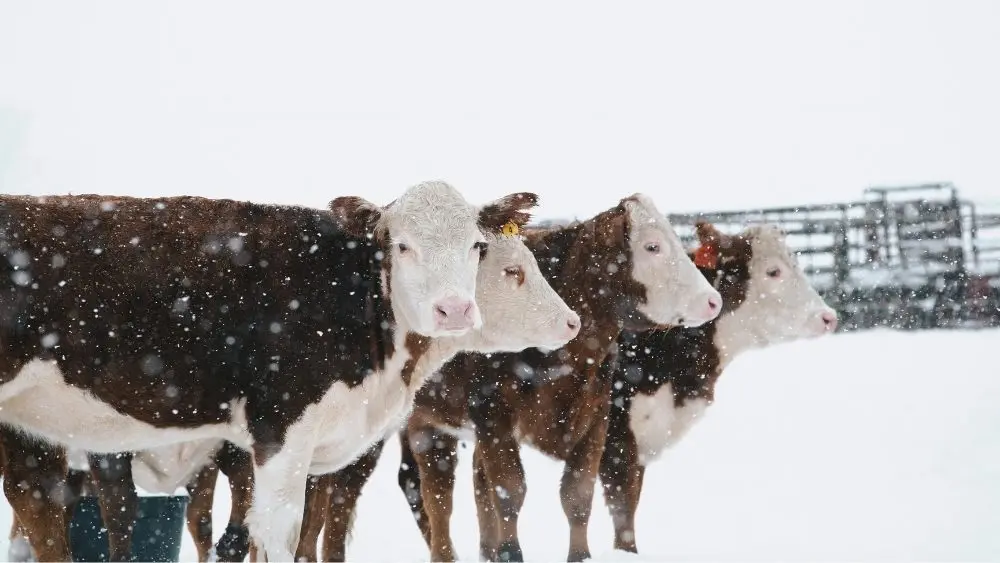
(Fargo, N.D.) – Agricultural operations in North Dakota have been significantly impacted by recent winter storms. The U.S. Department of Agriculture (USDA) has technical and financial assistance available to help farmers and livestock producers recover from these adverse weather events.
“USDA has a suite of programs to support farmers and ranchers as they recover from disasters,” said Farm Production and Conservation Under Secretary Richard Fordyce. “I encourage impacted producers to contact their local USDA Service Center to report losses and learn more about program options available to assist in their recovery from crop, land, infrastructure, and livestock losses and damages.”
USDA Disaster Assistance
Producers who experience livestock deaths in excess of normal mortality or sell injured livestock at a reduced price may be eligible for the Livestock Indemnity Program (LIP). To participate in LIP, producers will have to provide acceptable documentation of death losses or evidence of reduced sales resulting from an eligible adverse event, including an adverse weather event, and must submit a notice of loss to the USDA Farm Service Agency (FSA) no later than March 1, 2027, for 2026 calendar year losses.
Meanwhile, the Emergency Assistance for Livestock, Honeybees, and Farm-Raised Fish Program (ELAP) provides eligible producers with compensation for feed and grazing losses. ELAP also includes costs associated with equipment rental fees for hay lifts and snow removal. For ELAP, producers are required to complete a notice of loss and application for payment to their local FSA office no later than March 1, 2027, for 2026 calendar year losses.
Additionally, eligible orchardists and nursery tree growers may be eligible for cost-share assistance through the Tree Assistance Program (TAP) to replant or rehabilitate eligible trees, bushes or vines. TAP complements the Noninsured Crop Disaster Assistance Program (NAP) or crop insurance coverage, which covers the crop but not the plants or trees in all cases. For TAP, a program application must be filed within 90 days of the disaster event or the date when the loss of the trees, bushes or vines is apparent.
“Once you are able to evaluate the impact on your operation, be sure to contact your local FSA county office to timely report all crop, livestock and farm infrastructure damages and losses,” said Brad Thykeson, State Executive Director for FSA in North Dakota. “To expedite FSA disaster assistance, you may need to provide documents, such as farm records, herd inventory, receipts and pictures of damages or losses.”
FSA also offers a variety of direct and guaranteed farm loans, including operating and emergency farm loans, to producers unable to secure commercial financing. Producers in counties with a primary or contiguous disaster designation may be eligible for low interest emergency loans to help them recover from production and physical losses. Loans can help producers replace essential property, purchase inputs like livestock, equipment, feed and seed, cover family living expenses or refinance farm-related debts and other needs.
Additionally, FSA offers several loan servicing options available for borrowers who are unable to make scheduled payments on their farm loan programs debt to the agency because of reasons beyond their control.
Risk Management
Producers with NAP coverage should report crop damage to their local FSA office and must file a Notice of Loss (CCC-576) within 15 days of the loss becoming apparent, except for hand harvested crops, which should be reported within 72 hours.
Producers insured under Federal Crop Insurance are reminded that crop damage must be reported to their insurance agent within 72 hours of discovery, followed by written confirmation within 15 days. Additionally, if producers experience a natural disaster event that prevents marketing milk, they must provide written notice to their insurance provider within 72 hours.
“Crop insurance and other USDA risk management options are offered to help producers manage risk because we never know what nature has in store for the future,” said Alexa Talkington, Acting Director of USDA’s Risk Management Agency (RMA) Regional Office that covers North Dakota. “Disasters can be trying for producers, and they should stay in close contact with their crop insurance agent. Producers can be assured that the Approved Insurance Providers, loss adjusters and agents are experienced and well-trained in handling these types of events.”
Conservation
FSA’s Emergency Conservation Program (ECP) and Emergency Forest Restoration Program (EFRP) can assist landowners and forest stewards with financial assistance to restore damaged farmland and conservation structures or forests.
USDA’s Natural Resources Conservation Service (NRCS) is always available to provide technical assistance during the recovery process by assisting producers to plan and implement conservation practices on farms and working forests impacted by natural disasters. The Environmental Quality Incentives Program (EQIP) can help producers plan and implement conservation practices on land impacted by natural disasters.
“At USDA, we serve as a partner to help landowners with their resiliency and recovery efforts,” said Dan Hovland, NRCS State Conservationist in North Dakota. “Our staff will work one-on one with landowners to make assessments of the damages and develop methods that focus on effective recovery of the land.”
More Information
Additional USDA disaster assistance information can be found on farmers.gov, including USDA resources specifically for producers impacted by winter weather. Those resources include the Disaster Assistance Discovery Tool, Disaster-at-a-Glance fact sheet, Loan Assistance Tool, and Natural Disasters and Crop Insurance fact sheet. Additionally, Farm Raise offers an FSA educational hub with LIP and ELAP decision tools as well as farm loan resource videos. For FSA and NRCS programs, producers should contact their local USDA Service Center. For assistance with a crop insurance claim, producers and landowners should contact their crop insurance agent.