The U.S. House of Representatives Thursday approved a sweeping new farm bill, advancing major agriculture policy legislation to the Senate, but a controversial provision tied to California’s Proposition 12 dominated debate leading up to final passage.
Lawmakers voted 224-200 to pass H.R. 7567, the Farm, Food, and National Security Act of 2026. While the legislation spans the full breadth of federal farm policy—from commodity programs and conservation to nutrition assistance—the inclusion of language addressing state-level production standards quickly became a central flashpoint in negotiations and on the House floor.
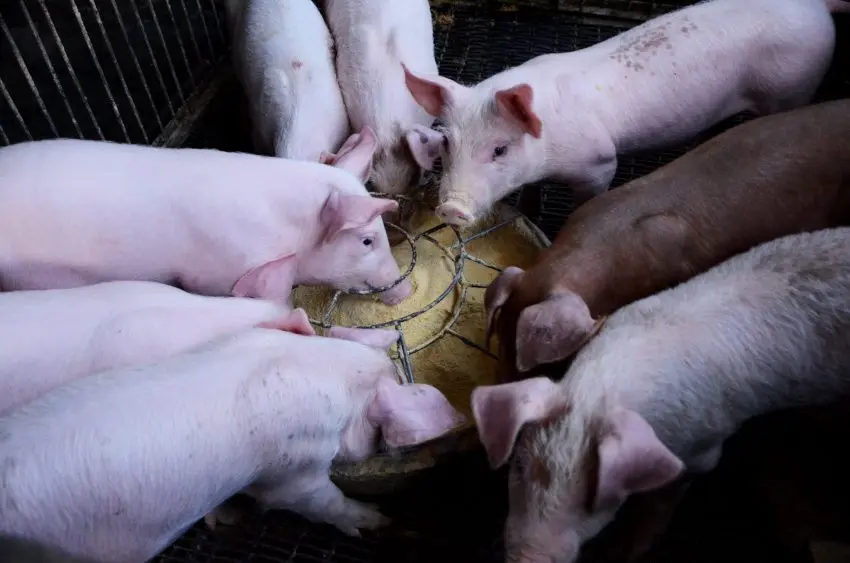
At issue is a provision that would limit states’ ability to impose agricultural production requirements on goods produced outside their borders. The language is widely viewed as a direct response to Prop-12, a California law establishing minimum space requirements for breeding pigs, egg-laying hens, and veal calves, regardless of where those animals are raised.
Supporters of the provision, led by House Agriculture Committee Chairman Glenn “GT” Thompson, a Republican congressman from Pennsylvania, argue the measure is necessary to protect interstate commerce and prevent a patchwork of state laws from dictating how farmers across the country operate. Thompson has repeatedly framed the issue as one of national consistency in agricultural markets, warning that divergent state regulations create uncertainty and inefficiencies for producers.
He has also argued that California’s approach effectively extends one state’s regulatory framework into nationwide supply chains, saying California allows one state to set production standards for the entire country. Thompson and allied Republicans maintain the provision is designed to prevent regulatory fragmentation and preserve a uniform national marketplace.
Support has also come from Republicans representing major livestock-producing states. Representative Ashley Hinson, a Republican from Iowa, has warned that Prop-12 places costly mandates on pork producers outside California, arguing that farmers in her state are being forced to comply with standards dictated by voters elsewhere. Representative Dusty Johnson, a Republican from South Dakota, has also pushed for federal action, emphasizing that inconsistent state-by-state rules create uncertainty in national markets.
Backers of the language also argue it provides regulatory certainty at a time when farmers are already facing tight margins, elevated input costs, and ongoing volatility in agricultural markets. They contend that compliance with varying state standards can require significant capital investment, particularly in the pork industry, where facility upgrades and supply chain adjustments can be extensive. This is especially true for family farms and smaller operations that don’t have the same access to funds like larger corporations do. Those costs, they argue, ultimately ripple through the system and can contribute to higher consumer prices and market disruption.
Beyond cost concerns, supporters say the provision establishes clearer federal guardrails that help ensure a more predictable operating environment for producers and agribusinesses navigating complex interstate commerce rules.
But opponents of the measure see it very differently, framing it as a direct challenge to states’ rights and voter-approved policies.
Democratic lawmakers and some Republicans have pushed back strongly against including the provision in the farm bill. Representative Jared Huffman, a Democrat from California, has been one of the leading critics, arguing the language would override the will of California voters and undermine state authority. He has characterized efforts to nullify Prop-12 as federal overreach, noting that the law was upheld after a review by the U.S. Supreme Court. It’s important to note that several opinions in the case pointed to the Capitol: if there is going to be a national standard—or a restriction on how far states can go in setting their own rules—that responsibility falls to Congress. Which is what the Prop-12 provisions in the Farm Bill aim to accomplish.
Representative Earl Blumenauer, a Democrat from Oregon, has echoed those concerns, warning that the provision could set a broader precedent limiting states’ ability to establish standards related to food safety, environmental protections, and animal welfare. Opponents argue that if the federal government preempts Prop-12, it could open the door to broader restrictions on state-level regulatory authority across agriculture and beyond. However, a similar argument is posed for the other side of that coin.
The actual text of Prop-12 is written to suggest it regulates what products can be sold within California, not how other states must produce them. States have historically had broad authority to set conditions on goods sold within their own borders, especially in areas like food safety, public health, and consumer protection.
Where Prop-12 becomes controversial is in its practical effect. Because California is such a large market, producers across the country must comply with its standards if they want access. That creates what critics call an “extraterritorial effect,” where a state’s policy effectively shapes behavior well beyond its borders—even though it technically applies only to in-state sales.
Legally, this issue has been tested under the Dormant Commerce Clause, a doctrine tied to the Commerce Clause of the U.S. Constitution. Opponents of Prop-12 argued that California was improperly regulating interstate commerce by imposing production standards on out-of-state farmers.
However, in the National Pork Producers Council v. Ross decision, the U.S. Supreme Court allowed Prop-12 to stand. The Court essentially found that while the law has clear out-of-state impacts, it does not directly regulate commerce occurring entirely outside California, and therefore doesn’t technically violate constitutional limits.
In that decision, several U.S. Supreme Court justices made it clear that Congress is the body best positioned to resolve conflicts like the one created by Prop-12. The Court ultimately upheld the proposition, but in doing so, it emphasized limits on the judiciary’s role in second-guessing state economic regulations.
Justice Neil Gorsuch, writing for the plurality, stressed that courts are not well-equipped to weigh the kind of economic tradeoffs opponents were asking them to consider—like balancing higher production costs against animal welfare benefits. He indicated that those types of policy judgments are more appropriately handled by elected lawmakers, not judges.
Justice Brett Kavanaugh, in a separate opinion, was more direct about the potential need for federal involvement. He warned that laws like Prop-12 could invite a wave of similar state regulations in other policy areas, potentially creating significant burdens on interstate commerce. He noted that the Constitution gives Congress the authority to regulate interstate commerce and suggested that Congress could step in if it determines that a patchwork of state laws becomes too disruptive.
The takeaway from the Court wasn’t an instruction that Congress must act, but rather a clear signal: the Constitution allows Congress to act if it chooses to. The justices effectively left the door open for federal legislation to set uniform standards or limit state-by-state variations.
That’s a big part of why Prop-12 has become such a focal point in the farm bill debate. Lawmakers pushing for the provision see it as Congress exercising that authority to establish clearer national rules, while opponents argue it goes too far in overriding state decisions.
In terms of precedent, that ruling—and Prop-12 itself—signals a few important things:
First, it affirms that voter-approved state laws can influence national markets without automatically being considered unconstitutional overreach. That’s significant because it gives states room to pursue policies reflecting local values, even when those policies affect interstate industries.
Second, it opens the door for more states to adopt similar “market access” laws. In theory, states could set their own standards on issues like environmental practices, labor conditions, or animal welfare tied to products sold within their borders. If multiple states do this with different requirements, it could create a patchwork of regulations that producers must navigate.
Third, it raises concerns about where the line is. While Prop-12 survived legal challenge, the Court did not establish a bright-line rule for how much burden on interstate commerce is too much. That uncertainty is part of what’s driving the push in Congress to address the issue through federal legislation like the farm bill.
Finally, it highlights a broader federalism debate. Supporters see Prop-12 as a legitimate expression of state sovereignty and voter will. Critics argue it effectively allows large states to set de facto national policy, which they view as undermining the ability of other states—and their voters—to determine their own agricultural practices.
Outside of California and the Pacific Northwest, opposition has also surfaced among lawmakers wary of reopening federalism debates within a must-pass farm bill.
The divide has not been purely partisan. While most Republicans have backed the provision, a handful have expressed discomfort with federal preemption of state laws. At the same time, a small number of Democrats from livestock-heavy districts have been more open to revisiting Prop-12 due to its impact on producers in their states, underscoring the geographic and economic divides shaping the debate.
The controversy reflects a deeper policy conflict that extends beyond animal housing standards. California voters approved Prop-12 in 2018, and the law has since survived multiple legal challenges, including a closely watched Supreme Court case. It has already reshaped portions of the pork and egg industries, forcing some producers to retrofit facilities, adjust production systems, or redirect products to different markets.
Those real-world effects have elevated the stakes in Washington, where agricultural groups, livestock producers, and food companies have increasingly pressed for federal intervention to create uniform standards.
Thursday’s House vote followed a tense week of negotiations on Capitol Hill, with the Prop-12 language emerging as one of the most divisive elements of the broader farm bill package. House leadership worked through multiple delays and internal disagreements before bringing the legislation to the floor.
In the end, the bill passed largely along party lines, though the underlying tensions surrounding Prop-12 remain unresolved and are expected to intensify as the legislation moves to the Senate.
The Senate is expected to take up its own version of the farm bill in the coming months, and early indications suggest the Prop-12 provision could face significant resistance. That sets the stage for a difficult conference process, where negotiators will have to reconcile sharply different approaches to federal versus state authority in agricultural regulation.
With the current farm bill set to expire at the end of September, the timeline adds urgency to negotiations, but also increases the likelihood that controversial provisions like this one will become central bargaining chips in final talks.