House lawmakers passed legislation Wednesday that would allow year-round sales of E15 gasoline, marking a major victory for Midwestern lawmakers and biofuels advocates after years of stalled negotiations, partisan fights, and repeated legislative failures.
The bill passed the House by a 218-203 vote, giving supporters of higher ethanol blends a long-sought breakthrough and setting up a renewed push to expand ethanol demand nationwide. Backers of the legislation say the measure would lower fuel prices for consumers, create stronger domestic demand for corn, and provide economic support for struggling rural communities.
The vote comes at a critical time for both agriculture and energy markets. Corn growers are facing mounting financial pressure after several consecutive years of tight margins and weak commodity prices, while rising tensions in the Middle East and disruptions tied to the war involving Iran have pushed gasoline prices higher nationwide.
Supporters also viewed the legislation as a key political victory heading into the November midterm elections. A bipartisan coalition of Midwestern lawmakers spent years lobbying House leadership to bring the proposal to the floor after previous attempts repeatedly collapsed amid opposition from oil-state Republicans.
The fight over nationwide E15 access has stretched across multiple presidential administrations. EPA first approved E15 for most vehicles in 2011, but federal summertime vapor pressure restrictions tied to Reid Vapor Pressure rules continued limiting sales during summer months in many states. In recent years, EPA has repeatedly issued emergency waivers allowing summertime E15 sales, but biofuels advocates argued Congress needed to provide a permanent nationwide solution.
Agriculture groups have spent years urging Congress to approve nationwide year-round E15 sales, while President Donald Trump earlier this year publicly encouraged lawmakers to negotiate an agreement supporting both farmers and refiners.
National Farmers Union praised the House vote, calling expanded E15 access both an economic and consumer issue. NFU President Rob Larew said year-round E15 would help families save money while creating stronger domestic market opportunities for farmers.
“At a time when both producers and consumers are facing continued economic pressure, expanding access to E15 is a commonsense step that strengthens competition in the fuel marketplace, supports homegrown energy and agriculture, and keeps more dollars circulating in rural America,” Larew said.
Congresswoman Julie Fedorchak, co-chair of the Congressional Biofuels Caucus and a cosponsor of the legislation, said farmers in her state have pushed for the measure for years.
“North Dakota farmers have been asking for this for years, and today the House delivered,” Fedorchak said. “Year-round E15 is a win for North Dakota farmers, ethanol producers, American energy security, and families looking for more options at the pump.”
The legislation would remove long-standing seasonal restrictions that currently limit summertime sales of E15 in many parts of the country. Supporters say the bill would establish a permanent nationwide standard instead of relying on temporary emergency waivers issued each summer.
“Eliminating the artificial prohibition on summer sales of E15 is an important step toward creating the consistent demand that will allow this industry to grow and stand on its own without RFS one day,” Fedorchak said during House floor debate.
The proposal also includes reforms tied to the Renewable Fuel Standard, including changes to small refinery exemptions and directives for EPA to modernize fuel infrastructure and labeling regulations tied to expanded E15 access nationwide.
Industry supporters argued the bill would create measurable economic benefits across rural America. According to estimates cited by supporters, year-round E15 access could add more than $25 billion to U.S. GDP and support more than 128,000 full-time jobs nationwide. Ethanol advocates also estimate the legislation could increase corn demand by as much as 2.4 billion bushels annually.
The National Corn Growers Association called the vote essential for corn producers facing ongoing economic challenges. Ohio farmer and NCGA President Jed Bower said the legislation arrives as many growers continue navigating high input costs and extended financial losses.
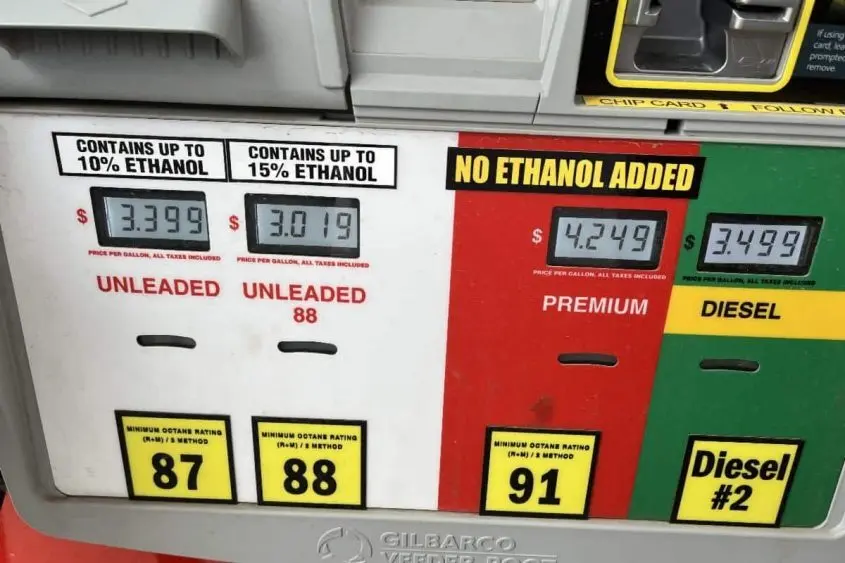
“Passage of this bill is essential to the success of corn farmers and rural communities, particularly as our growers face their fourth year of net losses and struggle with high input costs,” Bower said. “It would also help drivers across the country who could save 10 to 30 cents per gallon on gas as fuel prices continue to rise.”
Groups representing corn growers, ethanol producers, sorghum farmers, and biofuel advocates broadly praised the legislation as a long-overdue step toward stabilizing fuel markets and strengthening rural economies.
The American Coalition for Ethanol called the vote a “gigantic step” toward permanent nationwide access to E15. ACE CEO Brian Jennings said the legislation could quickly provide fuel savings as global energy markets react to continued instability in the Middle East.
“As gas prices continue to skyrocket across the United States, allowing E15 to be sold year-round is the fastest way to save consumers at the pump and help make America more energy secure in the face of the oil supply disruption in the Strait of Hormuz,” Jennings said.
Iowa Secretary of Agriculture Mike Naig called the vote a “major win” for drivers, farmers, biofuel producers, and rural communities while thanking Iowa lawmakers for helping force the issue to the House floor.
South Dakota Congressman Dusty Johnson said the legislation would provide consumers with lower-cost fuel options while strengthening domestic energy production.
“Year-round E15 sales is a big win for farmers and consumers,” Johnson said. “For years, I’ve been working to reach a deal that gives consumers a cheaper option at the pump, supports American agriculture producers, and increases homegrown energy production.”
Growth Energy CEO Emily Skor said the bipartisan vote moved the industry one step closer to delivering permanent access to lower-cost fuel blends nationwide.
“American families are asking for help, and today’s vote brings us one step closer to delivering real savings at the pump,” Skor said.
POET, the world’s largest bioethanol producer, also backed the legislation. Joshua Shields, the company’s Senior Vice President of Corporate Affairs, said making E15 available year-round would provide the certainty needed to continue expanding consumer access nationwide.
The Iowa Corn Growers Association described the House vote as a “monumental win” for corn growers and rural America, while National Sorghum Producers called it a “major victory” for agriculture and domestic energy production.
Nebraska Congressman Adrian Smith, co-chair of the Biofuels Caucus and sponsor of the legislation, called House passage a “historic win” for consumers, farmers, and American energy independence.
“Today’s House passage of my Nationwide Consumer and Fuel Retailer Choice Act marks a historic win for America’s consumers, farmers, and energy independence,” Smith said.
Illinois Congressman Eric Sorensen said the legislation would help lower gas prices while opening new markets for farmers nationwide.
“It’s long past time we stood up to Big Oil and expanded access to ethanol-blended fuel which will help support American farmers and energy producers while lowering prices at the pump,” Sorensen said.
Despite broad support from agriculture and biofuel groups, the legislation continues to face significant criticism from oil refiners and environmental organizations.
Oil-refining companies argue the proposal does not adequately address compliance costs and infrastructure concerns tied to expanded ethanol blending requirements. Environmental groups contend increased ethanol demand could shift crop allocations, increase pressure on land use, and raise broader concerns surrounding food-versus-fuel debates and long-term climate impacts.
A Congressional Budget Office analysis also found the legislation could add billions of dollars to the federal deficit over the next decade.
House leaders previously removed the E15 language from the farm bill last month as part of negotiations between House Speaker Mike Johnson and lawmakers from oil-producing states, highlighting the political divisions that continue surrounding ethanol policy.
The proposal now faces a difficult path in the Senate where oil-state lawmakers have repeatedly opposed similar measures over refinery concerns and fuel market impacts. Even with bipartisan support from Midwestern senators, supporters could face challenges reaching the votes necessary to move the legislation forward.
According to coverage by POLITICO’s Grace Yarrow, one agriculture lobbyist granted anonymity to discuss the negotiations said “God only knows” what will happen to the E15 bill in the Senate. A Republican Senate staffer who was also granted anonymity called the House proposal a “nonstarter,” according to Yarrow’s reporting.
“It won’t pass in the Senate. I feel very confident about that,” said the staffer, who works for a lawmaker opposed to the measure.
Still, biofuels advocates say the House vote represents the closest Congress has come in years to permanently expanding nationwide E15 access after more than a decade of political fights and temporary waivers.
“We need a new domestic market opportunity for our corn,” Rep. Brad Finstad said on the House floor Wednesday. “E15 delivers on that.”
Despite broad support from corn growers and ethanol advocates, the legislation has also exposed divisions within the agriculture industry itself.
The American Soybean Association said it “cannot support” the legislation in its current form, creating a rare split between organizations representing the nation’s two largest row crops.
An ASA spokesperson pointed to research from the Food and Agricultural Policy Research Institute at the University of Missouri, which found that while expanded year-round E15 access could modestly boost corn prices, those gains may be offset by lower soybean prices under certain biofuel demand scenarios.
“Based on the study’s findings, we advised ASA members that we could not support the amendment in its current form,” the spokesperson said, adding the organization has not yet taken a formal public position on the legislation.
The disagreement drew criticism from ethanol supporters and corn organizations, who argued expanded E15 access would broadly strengthen farm income and domestic biofuels markets.
“E15 strengthens corn demand and farm income for corn farmers, most of whom also raise soybeans,” said Nicole Hasheider, vice president of marketing and communications for the National Corn Growers Association. “Year-round E15 saves drivers money at the pump, supports America’s corn farmers and improves energy security for our country.”
With the House vote complete, the battle over year-round E15 now shifts to the Senate, where supporters say years of temporary waivers, stalled negotiations, and failed legislative attempts have left little appetite for another delay.