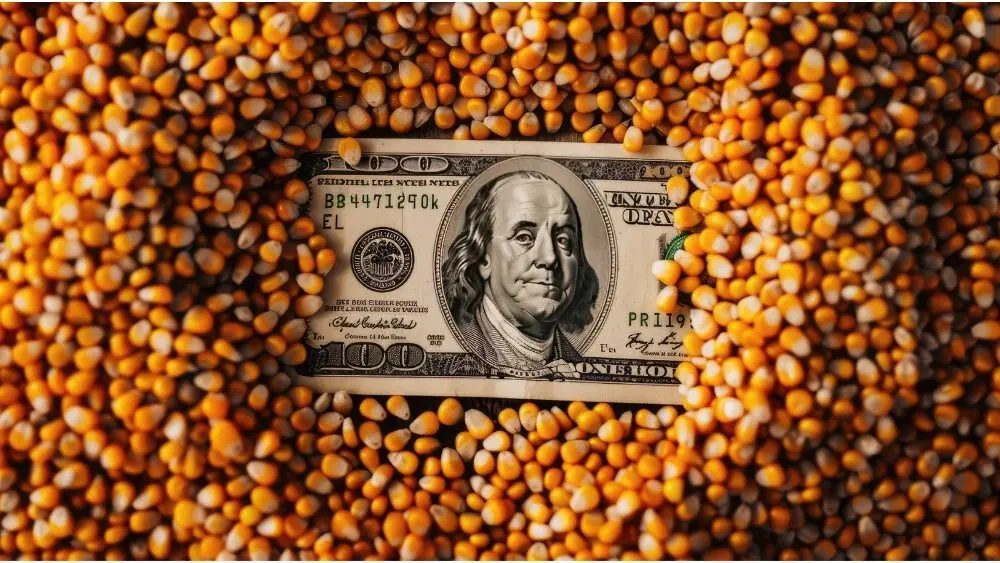
December corn briefly pushed above the $5 mark on Friday to close out a volatile week in the grain and oilseed markets. But despite a wave of outside money flowing into the commodity sector, corn has struggled to sustain a move through that key psychological level. On Friday’s episode of Market Talk, we sat down with Ted Seifried of Zaner Ag Hedge to break down the week’s action — from the E15 debate in Washington to Wall Street’s growing appetite for agricultural commodities.
Corn Probes $5 — A Two-Year Milestone
Friday’s session offered some relief after a nerve-wracking Thursday, when December corn nearly posted a key reversal lower following new recent highs. Seifried noted the market missed a bearish technical signal by a single tick — and then turned around and rallied the very next day.
“Getting December corn above $5 for the first time in two years — that’s really nice to see,” Seifried said.
The spread action on Friday was also telling. July corn led the way higher in what Seifried described as classic bull spreading — a sign that near-term demand is driving the strength. That demand picture remains robust, with export sales running hot and domestic usage steady despite last year’s record 17-billion-bushel crop.
The E15 Debate: Policy, Politics, and Price
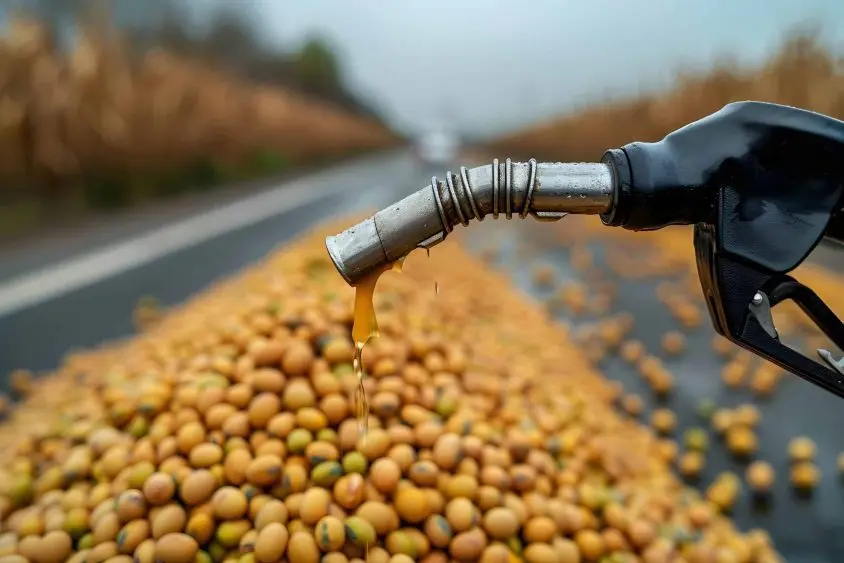
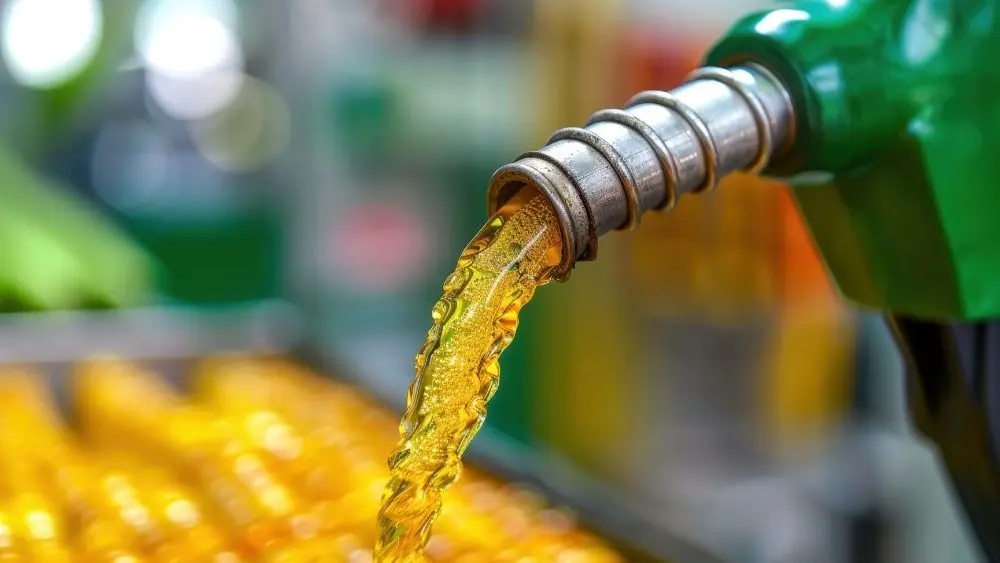
One of the week’s bigger storylines out of Washington was the House Farm Bill and the fate of E15 legislation — specifically, efforts to decouple year-round E15 sales from the broader bill and bring it to a standalone vote.
Seifried didn’t mince words on the policy argument. With ethanol prices historically cheap relative to unleaded gasoline, he sees E15 as a straightforward win for consumers at the pump — and questioned the motives behind opposition to it.
“The spread between ethanol and unleaded is about as wide as it’s ever been. If anything, E15 would be cheaper at the pump,” he said, adding that he suspects the influence of the oil industry in shaping the political narrative around the fuel blend.
The food-versus-fuel argument against ethanol also drew scrutiny. With corn prices only now recovering to levels seen a couple of years ago — nowhere near the multi-fold inflation seen in other sectors — Seifried said the inflation argument against corn-based ethanol simply doesn’t hold up.
Wall Street’s Big Commodity Trade
Perhaps the most significant market theme of the week — and potentially the most important driver of grain prices right now — is the surge of outside money pouring into the commodity complex.
Seifried pointed out that large speculators are currently holding long positions in grains and oilseeds that rival, or may even exceed, the same period in 2021 and the 2021-22 marketing year — a time when demand was red-hot and inflation was running rampant from COVID-era stimulus spending.
“For the large speculator to be as bullish as they were in 2021 and 21-22 says a lot for these markets,” he said. “There’s really no end in sight for how big of a position these large speculators could be building in this sector as a whole.”
The narrative fueling that money flow? Fertilizer shortages, global food supply concerns, and geopolitical uncertainty — a story that has captured the attention not just of traditional commodity funds, but of a much broader universe of investors.
“Speculators as a whole have really latched onto this bigger, broader narrative,” Seifried said. “Your doctors and lawyers sitting in a small office somewhere — they’re all in this trade.”
A Bullish Longer-Term View, With Near-Term Caution
Despite the enthusiasm in the speculative community, Seifried offered a nuanced take. The corn fundamentals in the here and now are somewhat mixed — a fast planting pace running 6% above the five-year average, plentiful old-crop stocks, and producers with significant unpriced bushels — all factors that could weigh on the market in the near term.
“I have a hard time really justifying the strength in the here and now,” he acknowledged, while also emphasizing that his longer-term outlook remains bullish given how tight the supply-demand balance could become if this year’s crop faces any weather stress.
His advice for producers: don’t fight the narrative, but don’t ignore the risk either. With December corn at $5, Seifried recommends scaling into sales — perhaps 30% of the crop — while using re-ownership strategies to keep upside exposure intact.
“If you sell 30% of your crop at $5 December corn, you still have 70% of it’s upside open,” he said. “Scaling into sales is one way of leaving the upside open to some extent.”
His broader seasonal view is that corn and soybeans are more likely to hit their highs in May, June, or July — consistent with a more typical crop year pattern. The key risk: if the speculative narrative breaks down before harvest, a sharp correction could follow.
Soybeans and the Frost Threat
Soybeans also had a solid week, with old-crop July beans pushing back above $12 and new-crop November beans showing relative strength. Seifried noted that soybean spreads were actually “bear spreading” on Friday — with back-month contracts outperforming the front — suggesting the market is more concerned about new-crop production risk than current export demand.
A frost threat across parts of the Corn Belt heading into early May added a weather premium to both markets late in the week, and Seifried sees soybeans walking a fine line between protecting old-crop export demand and pricing in potential new-crop production risk.
Looking Ahead
With fund positioning at historically elevated levels, the E15 debate still unresolved in Washington, and weather uncertainty ahead for the growing season, the grain markets are set up for a dynamic May. Seifried’s core message: be disciplined, protect the downside, but don’t give away all your upside in a market that has real reasons to go higher.
Ted Seifried is a market strategist and analyst at Zaner Ag Hedge. He can be reached directly at 312-277-0113 or at zaner.com. Follow him on X at @TheTedSpread for daily market commentary. ***DISCLAIMER*** Always remember the risk of trading futures and options can be substantial.